

Drone Roof Inspection & Aerial Thermal Survey work in San Diego starts with roof condition, access, drainage, existing assembly, occupant impact, and whether repair, restoration, maintenance, or replacement is the practical next step.
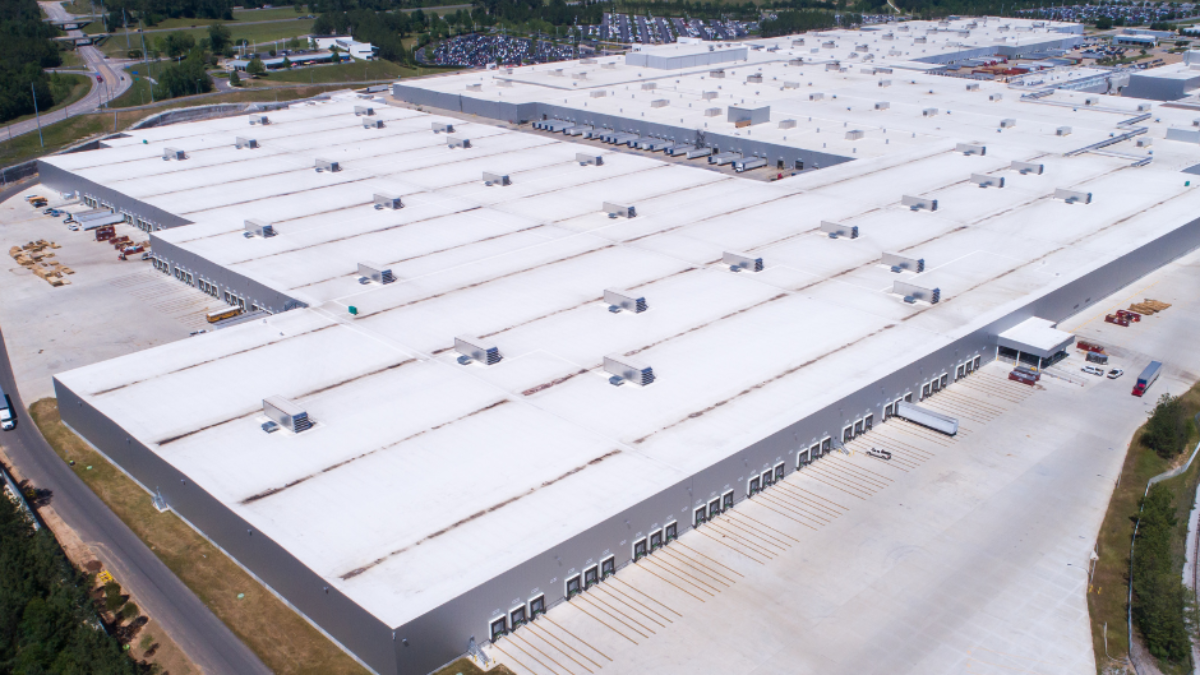
Request a quoteSome of the roofs we are asked to assess run past two hundred thousand square feet, and a clipboard inspection of a surface that size is a compromise from the first step. By the time an inspector has walked it corner to corner, the marine layer has burned off and burned back in, the early findings have faded, and the failures that cost the most — wet insulation hiding under a membrane that still looks fine from above — were never visible from standing height anyway. We fly these roofs instead. A drone holds a fixed altitude, records every drain sump, seam, and penetration in high resolution, and hands us the whole roof as a single connected picture rather than a pile of scattered notes.
San Diego hands us an enormous amount of roof to read. The distribution and logistics buildings around Otay Mesa and along Siempre Viva Road, the warehouse rows feeding the I-805 and I-15 corridors, the research and office campuses in Sorrento Mesa and around the University Towne Centre district, and the institutional roofs near the Port and the bayfront all share one profile: large, low-slope, awkward to walk, and costly to misjudge. Aerial inspection was built for precisely this inventory.
The single most valuable instrument we fly over a San Diego commercial roof is the thermal camera, and the reason is heat physics, not gadgetry. Insulation that has taken on water stores and releases heat differently than the dry board beside it. Through a sunny day the entire roof absorbs solar energy; after sundown the dry field sheds that heat quickly while the saturated areas stay warm well into the evening, because water holds far more heat than dry insulation. Fly a thermal pass during that evening cool-down and the trapped moisture glows as a sharply outlined warm signature, mapped to its exact footprint — even where the membrane on top is completely intact and gives away nothing.
That one finding drives the most expensive decision on the building. A handful of isolated wet pockets points to targeted cut-out and repair. Saturation creeping across a third of the field points to a recover or a full tear-off, because no coating and no patch will rescue wet insulation once you have sealed it underneath. Thermal imaging turns that judgment from a hunch into a measurement, and there is no practical way to run a consistent survey of that kind on foot across a roof this large — it takes the systematic, even-altitude coverage that only a flight delivers.
Every person who walks a low-slope roof leaves it a little worse than they found it — scuffed membrane, crushed insulation, the occasional tool dropped through a skylight. On an aged or unknown roof, sending a crew up before anyone understands the condition is also a genuine safety exposure over questionable decking and hidden soft spots. A drone surveys from above and touches nothing. We build the complete condition record before a single boot lands, so when a crew finally does go up, they go up already knowing where the open seams, the spongy areas, and the weak deck sections are.
This is regulated airspace, and we treat it that way. Commercial drone work is flown under FAA Part 107 by a certificated remote pilot, and a large share of San Diego sits beneath controlled airspace. The approach and departure corridors for San Diego International, the shelves around Montgomery-Gibbs Executive Airport and Brown Field down in Otay Mesa, and the airspace tied to MCAS Miramar all impose altitude ceilings and authorization requirements through the FAA's LAANC system. We check the airspace for your specific address, secure any authorization required before launch, and brief the flight around the people and traffic below. Wind, marine-layer ceiling, and visibility get a final check the morning of the survey — we will not fly conditions that would make the data unreliable.
A flight is only worth the document it produces. Every image is GPS-tagged, so anything we flag on screen ties back to a precise spot on the roof. We deliver an annotated condition record that pairs the visual imagery with the thermal moisture map, calls out each penetration, drain, and flashing concern, and confirms roof-area measurements pulled from a stitched orthomosaic. For an owner shaping a capital plan, that record separates what needs money now from what can wait a budget cycle. For a reroof specification, drawings get built from real conditions, which cuts the requests for information and change orders that otherwise stack up the moment a tear-off starts.
Roofs here do not fail the way they do in freeze-thaw country. They fail slowly, under relentless ultraviolet and a salt-laden marine layer that rolls off the Pacific most mornings, and that environment goes after metal first. Edge metal, coping, fastener heads, equipment screens, and gas-line supports corrode from the coast inland, and a drone gives us a tight, repeatable look at every linear foot of perimeter metal and every rooftop unit without a man-lift or a long walk. Zoom the camera onto a cleat or a termination bar and you can tell whether the rust is cosmetic or whether the fastening is actually letting go. On coastal-facing roofs around Point Loma, the airport district, and the bay, we use the aerial pass to catch corroding metal and lifting edge details while they are still a repair and not yet a reason to re-cover the whole roof.
If your roof is under roughly ten thousand square feet or steeply pitched, a sharp inspector on foot is fast and complete and a drone adds little worth paying for. Above that, on the flat low-slope roofs that dominate San Diego's commercial and industrial inventory, the aerial-plus-thermal approach is simply more thorough and far less damaging. Call us when you need a real condition assessment ahead of a reroof bid, when you suspect hidden moisture under a membrane that still looks healthy, or when you simply want to know what twenty-five years of sun and salt air have done to a roof you have never been able to see all at once.
Drone Roof Inspection & Aerial Thermal Survey is scoped around coastal metal exposure, San Diego access limits, rooftop equipment, tenant protection, drainage, and what the owner needs to decide next.
Start a Request
A practical roof scope tells the owner what is urgent, what can wait, what needs testing, and which details change the budget.
San Diego roof work should account for marine air, reflective roof requirements, tenant operations, drainage, and rooftop service traffic.
Photos tied to roof areas, drains, penetrations, and sheet metal
Repair, coating, recover, replacement, and maintenance paths separated
Access, staging, tenant notices, work hours, and daily dry-in reviewed