

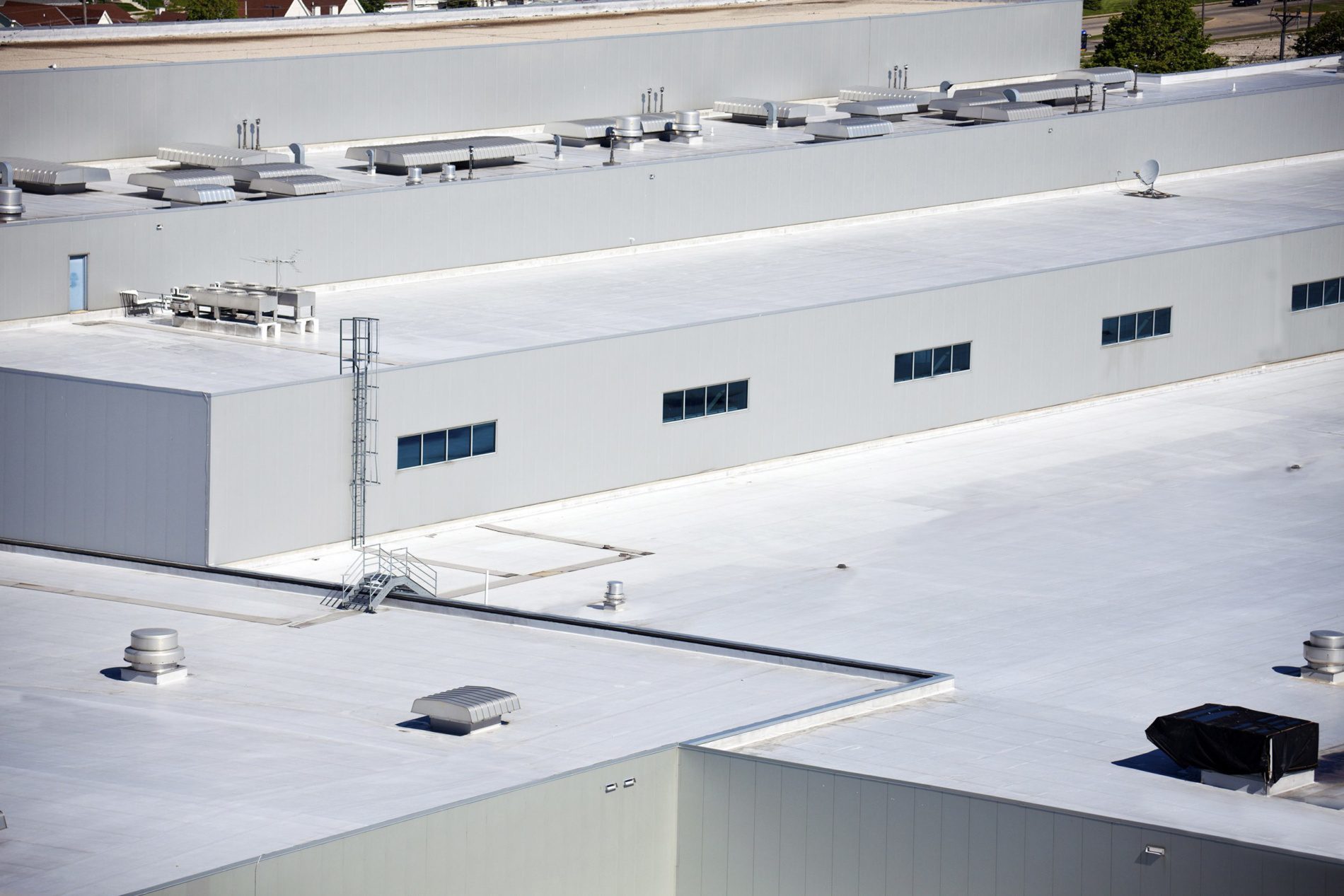
Manufacturing Facility Roofing work in San Diego starts with roof condition, access, drainage, existing assembly, occupant impact, and whether repair, restoration, maintenance, or replacement is the practical next step.
Request a quoteCommercial roof scope, inspection, access planning, and documentation for acrylic roof coatings.
San Diego's manufacturing economy is rooted in two world-class sectors that define the region's industrial character: defense and aerospace, led by General Dynamics' NASSCO shipyard in Barrio Logan and Northrop Grumman's Miramar facility, and biotechnology, concentrated in Torrey Pines and Sorrento Valley. Both sectors place demanding and technically specific requirements on commercial roofing systems that have no parallel in standard commercial construction.
Defense manufacturing and shipbuilding at NASSCO generate welding fumes, metallic particulates, and specialty chemical vapors from marine coatings, hydraulic systems, and propulsion component manufacturing. Rooftop surfaces above metal fabrication and ship assembly areas accumulate metallic dust, weld spatter, and marine paint overspray from operations conducted inside the building as well as the outdoor shipyard environment. Modified bitumen with a granule-surfaced cap sheet is often preferred at defense heavy manufacturing sites because granule surfaces resist damage from metallic debris better than smooth single-ply membranes, while still providing adequate chemical resistance when the correct bitumen formulation is selected.
San Diego's biotech sector—home to companies like Illumina, Thermo Fisher Scientific, and dozens of smaller biologics developers in the Torrey Pines cluster—requires the same pharmaceutical-grade cleanroom roofing approaches found in other major biotech markets. Process solvents, biological waste exhaust, and specialty gas cabinet ventilation create chemically complex rooftop environments. Fully adhered 60-mil TPO or EPDM with manufacturer-verified chemical resistance against the facility's specific process chemistry is the baseline specification. California DSA (Division of the State Architect) compliance is not directly applicable to private biotech facilities, but OSHPD-regulated clinical research facilities associated with UCSD's health sciences campus may have additional structural requirements.
Vibration from both shipbuilding (large plate saws, overhead cranes, hydraulic presses) and biotech (centrifuges, fermenters, lyophilizers) creates a fully adhered membrane requirement across San Diego's industrial manufacturing base. NASSCO's building structures are among the oldest and heaviest in San Diego's industrial portfolio, with some structures dating from World War II shipyard construction. Deck condition assessment—probing, coring, and load verification—is essential before specifying any add-on roofing system weight at these legacy structures.
San Diego's climate is among the most benign in the United States—mild winters, dry summers, and moderate rainfall—but this apparent gentleness masks roofing challenges specific to the coastal Southern California environment. Marine aerosol salt deposits accumulate on rooftop surfaces in Barrio Logan and other coastal-adjacent industrial areas, attacking metal flashings, fasteners, and membrane lap sealants. Stainless steel fasteners, anodized aluminum flashings, and marine-grade sealants are appropriate specifications for coastal San Diego industrial buildings within five miles of the bay or ocean.
Skylights are used widely in San Diego's biotech campuses and light manufacturing facilities. The region's 266 annual sunny days make natural lighting both practical and energy-efficient. Skylight curb flashings require annual inspection for salt-related deterioration of sealant joints, a maintenance need that is often underappreciated at inland facilities but is genuinely significant within San Diego's coastal industrial zone.
California's seismic requirements shape roofing system selection throughout San Diego County. The Rose Canyon Fault Zone, which passes directly through central San Diego, creates significant seismic exposure for the region's manufacturing base. Fully adhered roofing systems are preferred for their seismic performance. Penetration flashings must accommodate building movement, and expansion joint roofing covers should be verified for the design drift values applicable to each structure.
California Title 24 cool-roof requirements apply to all San Diego re-roofing projects on commercial and industrial buildings, and SDG&E (San Diego Gas & Electric) offers commercial energy efficiency rebate programs that can partially offset the cost premium of high-SRI membrane systems. San Diego's mild climate means the energy payback on cool roofing is somewhat longer than in hotter inland markets, but the combined code compliance requirement and rebate incentive make reflective membranes the clear economic choice.
Engage a California C-39 Roofing Contractor with manufacturer system authorization, documented experience on defense/aerospace or biotech manufacturing facilities in San Diego, and demonstrated familiarity with coastal corrosion protection requirements and California seismic roofing design considerations.
Manufacturing Facility Roofing is scoped around coastal metal exposure, San Diego access limits, rooftop equipment, tenant protection, drainage, and what the owner needs to decide next.
Start a Request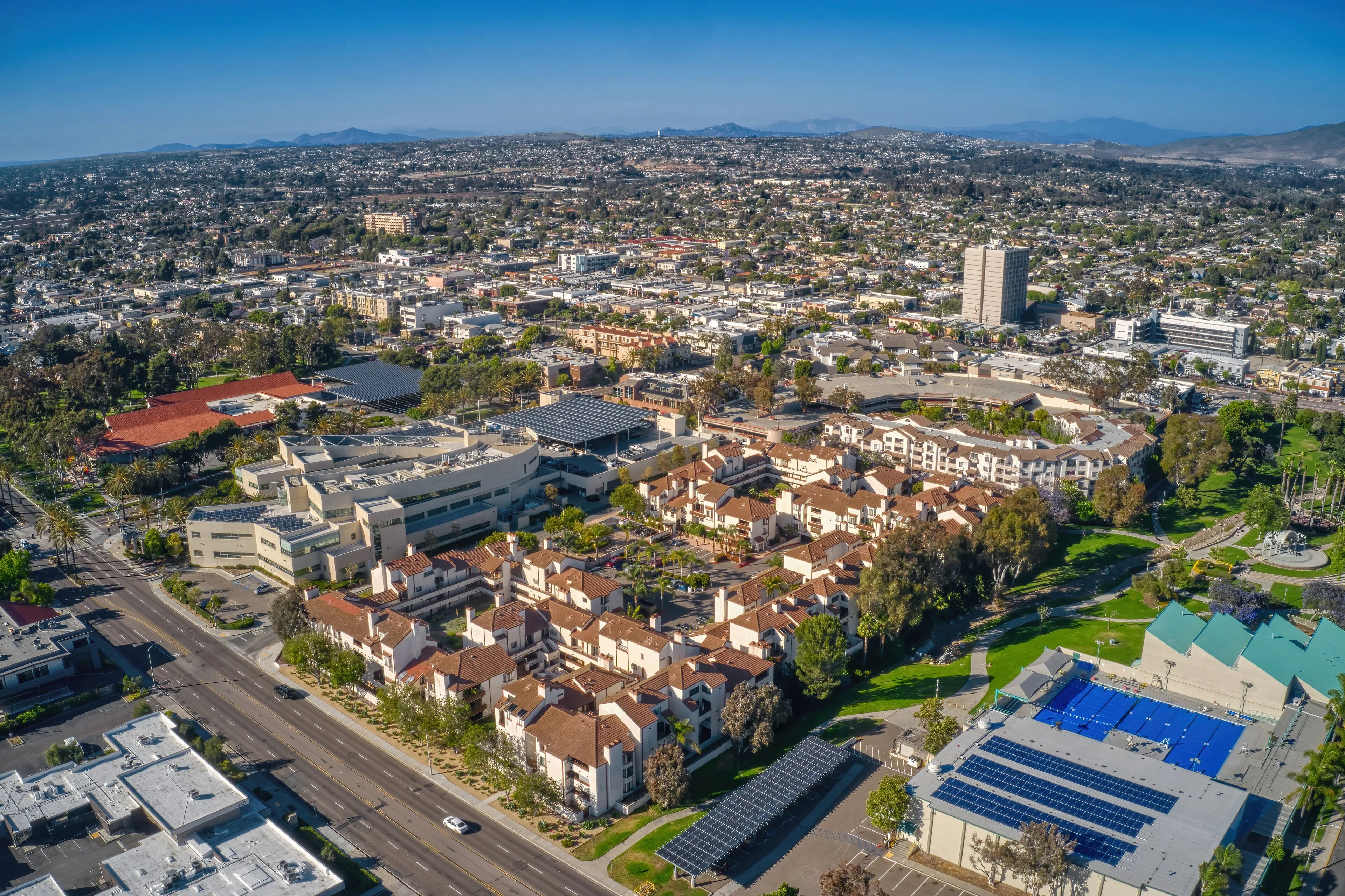
A practical roof scope tells the owner what is urgent, what can wait, what needs testing, and which details change the budget.
San Diego roof work should account for marine air, reflective roof requirements, tenant operations, drainage, and rooftop service traffic.
Photos tied to roof areas, drains, penetrations, and sheet metal
Repair, coating, recover, replacement, and maintenance paths separated
Access, staging, tenant notices, work hours, and daily dry-in reviewed